
Software quality has never been more important.
Whether you’re building a SaaS platform, mobile application, enterprise system, or eCommerce solution, users expect every digital experience to be fast, reliable, secure, and intuitive.
Most organizations invest heavily in internal Quality Assurance (QA). Development teams write automated tests, QA engineers execute manual test cases, and product managers verify business requirements before launch.
So why do many products still receive poor reviews, experience user drop-offs, or require urgent fixes after release?
The answer often lies in a challenge that many organizations overlook—internal familiarity.
The Strength of Internal QA
Let’s be clear: internal QA is essential.
Without it, software cannot be delivered with confidence.
Internal QA teams understand the product architecture, business logic, and functional requirements better than anyone else. They play a critical role in identifying defects, validating features, and ensuring software behaves as expected.
However, every internal team shares one unavoidable characteristic:
They helped build the product.
That familiarity can unintentionally influence how software is evaluated.
When Familiarity Becomes a Blind Spot
After spending weeks—or even months—working on the same application, developers, designers, and QA engineers naturally become experts in every workflow.
They know:
- Where every button is located.
- Which shortcuts to use.
- What each screen is supposed to do.
- How users are expected to navigate the system.
First-time users don’t have that knowledge.
What feels intuitive to your team may feel confusing to your customers.
This phenomenon is commonly known as Product Blindness—the inability to objectively evaluate a product because of prolonged familiarity with it.
It doesn’t reflect poor engineering.
It reflects normal human behavior.
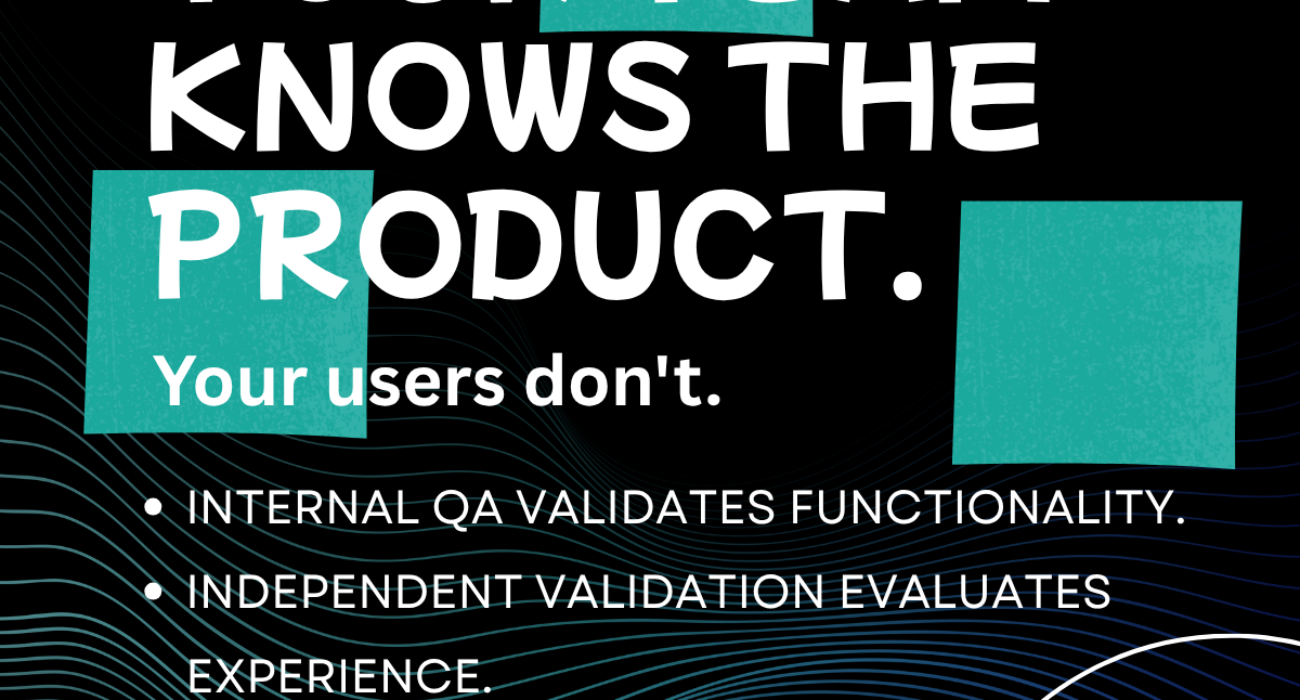
Internal QA Finds Bugs. Independent Validation Finds Risks.
Traditional QA answers questions like:
- Does the feature work?
- Is the bug resolved?
- Does the application crash?
Independent Product Validation asks different questions:
- Will a first-time user understand this workflow?
- Is the onboarding experience clear?
- Are there usability barriers affecting adoption?
- Is the software truly ready for public release?
- Are there hidden quality risks beyond functional testing?
These questions often reveal issues that automated testing and internal reviews cannot identify.
Why Modern Software Teams Need Both
The most successful software organizations don’t choose between internal QA and independent validation.
They combine both.
Internal QA ensures technical correctness.
Independent Product Validation provides an objective assessment of software quality, usability, performance, and overall launch readiness.
Together, they create stronger products, reduce post-launch risks, and improve customer confidence.
How Relivox Labs Helps
At Relivox Labs, we believe software quality should be evaluated from both technical and user perspectives.
Our independent Product Validation approach complements existing QA teams by providing an unbiased assessment before products reach customers, stakeholders, or investors.
We don’t replace your internal QA process.
We strengthen it with objective validation, helping organizations identify hidden risks before they become business problems.
Final Thoughts
Building software is only the first step.
Testing software is the second.
Validating software from an independent perspective is what prepares it for the real world.
The products that earn long-term customer trust aren’t simply the ones that work—they’re the ones that consistently deliver reliable, intuitive, and high-quality experiences.
That’s why modern software teams need more than Quality Assurance.
They need independent Product Validation.
About Relivox Labs
Relivox Labs is Pakistan’s Independent Product Governance & Technical Validation Hub, helping startups, software houses, and enterprises improve software quality through independent QA, usability evaluation, product validation, and launch readiness assessments.
Excellence Without Question.